
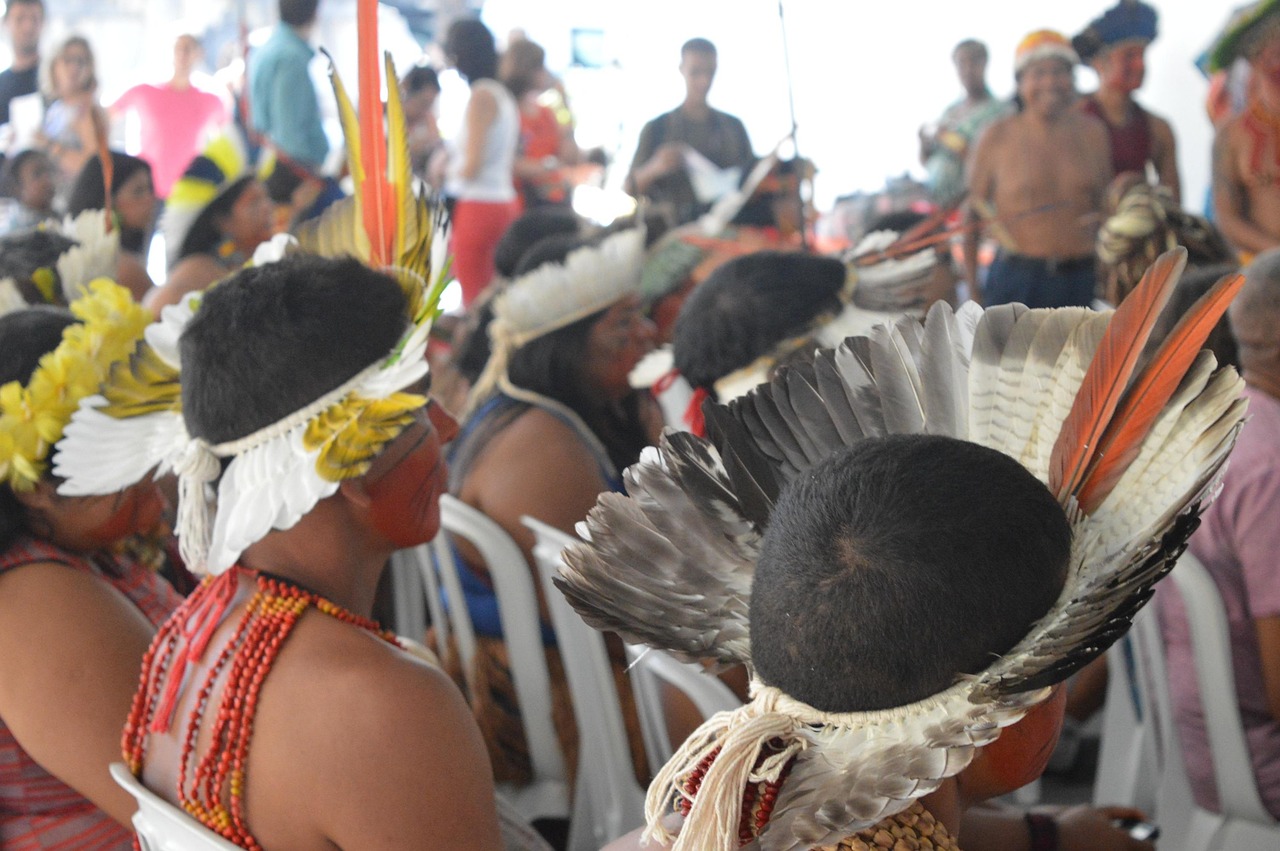
In a time when many people are searching for holistic healing and a deeper, spiritual connection to the natural world, their gaze often turns to the original knowledge keepers of this Earth: the shamans and medicine people of Indigenous cultures. The term “Native American shamanism” encompasses an immense diversity of practices, belief systems, and rituals from hundreds of different nations. However, they share a central conviction: everything is alive, ensouled, and interconnected. This article delves into the core aspects of this complex tradition – its rituals, its unique approach to healing, and its radical perspective on our relationship with nature – and shows what we can respectfully learn from it today.
Cultural and Historical Background: The Shaman as Mediator
It is crucial to understand that there is no single “Native American shamanism.” Each nation – from the Lakota on the Plains to the Mapuche in the Andes to the Siberian peoples from whom the term “shaman” originates – has its own specialists, often called Medicine People, Healers, or Seers. What unites these individuals is their role as mediators between worlds. They are able to journey into an altered state of consciousness to communicate with spirit beings, power animals, and ancestors. They acquire their knowledge not through books but through a often difficult personal calling (a “shamanic illness”), long training under an experienced teacher, and direct spiritual experience. In traditional communities, they are indispensable for diagnosis, healing, spiritual guidance, and maintaining balance between the community and the unseen world.
Core Rituals: The Tools of Connection
Shamanic practice manifests in powerful rituals that serve as channels for spiritual forces:
- The Sweat Lodge Ceremony (Inipi – Lakota): More than a physical purification, the sweat lodge is a symbolic return to the womb of the Earth. In the darkness of the lodge heated by hot stones, prayers, songs, and heat are used to release physical and spiritual blockages, to pray, and to gain insights. It is a central ritual of humility and renewal.
- Drum Journeys and Singing: The steady, monotonous rhythm of the drum (often 4-7 beats per second) serves as a “ride” that helps the shaman alter their state of consciousness and journey into non-ordinary reality. Specific songs invoke spirits or healing powers.
- The Use of Sacred Plants (Medicine): Some traditions use certain plants as sacraments and teachers, such as tobacco (as a sacred offering and means of communication), sage or cedar for smudging (purification), or in South American contexts, ayahuasca. Their use is always embedded in a strict ritual and ethical protocol.
- Vision Quest: A rite of passage where a person seeks clarity, vision, and guidance alone and fasting in nature. The shaman prepares the seeker and later interprets the experience.
Shamanic Healing: Holism and Soul Retrieval
The shamanic view of illness differs fundamentally from Western medicine. Illness is often understood as a loss of power, an imbalance, or a loss of soul parts, caused by spiritual intrusion, broken taboos, or traumatic experiences. Healing therefore aims not primarily at the symptoms but at the cause in the spiritual world.
- Soul Retrieval: One of the most profound shamanic healing methods. The healer journeys into non-ordinary realities to locate and retrieve lost, fragmented, or “frightened” soul parts of a person. This is often applied to people who, after trauma, feel “not all there” or emotionally numb.
- Extraction: The healer removes energetic or spiritual influences (“spirits of illness”) that have lodged like foreign objects in a person’s energy field, causing pain or sickness.
- Work with Power Animals and Spirit Guides: From a shamanic perspective, every person has helping spirit beings. The shaman helps a person get to know and work with their own power animals to strengthen protection, guidance, and personal power.
- Ritual Cleansing and Blessing: Through smudging, sprinkling with water, or singing sacred songs, a person or place is cleansed of negative energies and charged with positive force.
Connection to Nature: The World as a Living Web of Relationships
At the heart of shamanism lies not a technique but a radically relational worldview. Nature is not an object but a community of subjects.
- Everything is ensouled (Animism): Stones, rivers, mountains, plants, and animals have a spirit, a personality, and a voice. The shaman can communicate with them and learn from them.
- Nature as Mirror and Teacher: The behavior of animals, the weather, or the growth of plants are understood not as random but as meaningful messages. A shaman “reads” nature like an open book of wisdom.
- Responsibility and Reciprocity: Since everything is interrelated, an ethic of reciprocity emerges. One takes nothing from the Earth (a plant, an animal) without asking permission, giving thanks, and giving something back (often an offering like tobacco). Healing for oneself is inseparable from healing for the Earth.
Modern Relevance and Respectful Approach
The global “shamanism boom” has partly popularized, partly exploited these traditions. Yet their contemporary relevance is evident: they offer a profound ecological spirituality and psychosomatic healing approaches often lacking in the Western world.
- Rediscovery of Nature Connection: The shamanic worldview can help us heal our alienated relationship with nature and re-enter a feeling of sacred kinship.
- Holistic Psychology: Concepts like soul loss and retrieval find parallels in modern trauma theory (dissociation) and offer powerful narrative and imaginative healing approaches.
- Ethical Warning: Cultural Appropriation: It is of utmost importance not to view shamanism as a “spiritual toolkit” to pick and choose from. Many rituals (like the sweat lodge) are closed, cultural practices of specific nations. Practicing them without being an invited guest and student of an authentic lineage is disrespectful and harmful.
- Respectful Path of Learning: A respectful approach focuses on the universal principles (connection, reciprocity, holism) and applies them in one’s own cultural context, rather than copying Indigenous rituals. One can view nature as alive without calling oneself a “shaman.”
Practical Use: What We Can Take for Our Lives
- Perceive Nature Again as Teacher: Take time to sit quietly in nature. Try to see a tree, a stone, or a bird not as an object but as a being with its own presence. What quality does it have? What might it communicate to you?
- Cultivate the Practice of Gratitude and Reciprocity: Develop a small personal ritual of thanks – before a meal, when drinking water, or upon entering a beautiful place. Consciously acknowledge what you receive and consider how you can give back (e.g., by picking up litter, donating to conservation).
- Strengthen Your Own “Medicine” and Intuition: Every person has unique gifts (“medicine”) that can serve the world. Reflect: What makes you feel alive? In what activity do you lose track of time? Where do you feel a deep flow? These are clues to your personal medicine.
- Work with Your Personal “Power Animals”: You don’t need to consult a shaman to build a relationship with animal symbols. Notice which animal you encounter repeatedly in your life (in reality, in dreams, in art). Research its qualities in mythology – it can be a mirror and teacher for qualities you wish to develop or invoke.
- Engage Responsibly with Shamanic Offerings: If you are interested in a workshop or ritual, research the origin and legitimacy of the teacher thoroughly. Respect that the deepest teachings are often not passed on in weekend courses but in long-term, community-authorized relationships.
For Whom Is This Article? These Readers Benefit Especially
- Spiritual Seekers, looking for Earth-connected, non-dogmatic paths.
- People in Healing Professions or Personal Healing Processes, seeking holistic perspectives beyond conventional medicine.
- Environmentally Conscious and Nature-Connected People, wanting to deepen their relationship with the Earth.
- All Who Feel that the modern world has lost something essential and are searching for timeless sources of wisdom.
- The Critically Interested, wanting to understand what shamanism truly is (and is not), beyond esoteric clichés.
Frequently Asked Questions About Native American Shamanism
Can anyone become a shaman or learn shamanic techniques?
In Indigenous traditions, the shamanic role is almost always a calling that comes from the spirit world, often initiated by a severe crisis or illness, and then confirmed and trained through years of hard apprenticeship under a master. It is not a hobby or a career path. What people learn today in Western seminars are often inspired, modern adaptations of universal principles (like mindfulness, imaginative work, nature connection). These can be very valuable, but they do not make one a shaman of a specific Indigenous tradition. The respectful attitude is to learn from the principles without unlawfully claiming the title or the specific, protected rituals.
What is the difference between shamanism and religion?
Shamanism is typically not an institutionalized religion with a fixed dogma or sacred scripture. It is an experience-based, ecstatic spirituality grounded in the direct, personal relationship of the practitioner to the spirit world. The shaman is a practitioner who works for the community, often within an animistic worldview. Religions can contain shamanic elements, but shamanism itself is more a method and a worldview than a religion.
How do I recognize a reputable teacher or an authentic offering?
Be skeptical of promises of quick enlightenment and high prices. A reputable teacher: 1) Acknowledges their teacher(s) and source transparently. 2) Emphasizes respect, humility, and ethical practice, not just techniques. 3) Respects cultural boundaries and explains what they are passing on (universal principles vs. specific, closed rituals). 4) Often has a long-term, continuous relationship with a living tradition or community. Trust your gut feeling: Does it feel respectful and integrated, or like spiritual consumption?
Conclusion: A Bridge Between Worlds – For Our Time
Native American shamanism, in its true depth and diversity, offers no simple techniques for self-optimization. It offers something far more valuable: a map for a sacred world in which everything lives, feels, and communicates, and in which healing is always an act of restoring relationships. In our time of ecological and psychological crises, this perspective is not exotic but urgently necessary.
By allowing ourselves to be inspired by this wisdom – by learning to see nature as kin, taking responsibility for our actions across seven generations, and striving for the wholeness of body, mind, and spirit – we can begin to heal the deep wounds of our alienation. The true spirit of shamanism invites us not to plunder other cultures but to awaken and rediscover and honor our own, deep, forgotten connection to the pulsating, living web of life.
In respect and gratitude to all authentic medicine people, elders, and knowledge keepers who keep the sacred fire of these ways alive against all odds.