
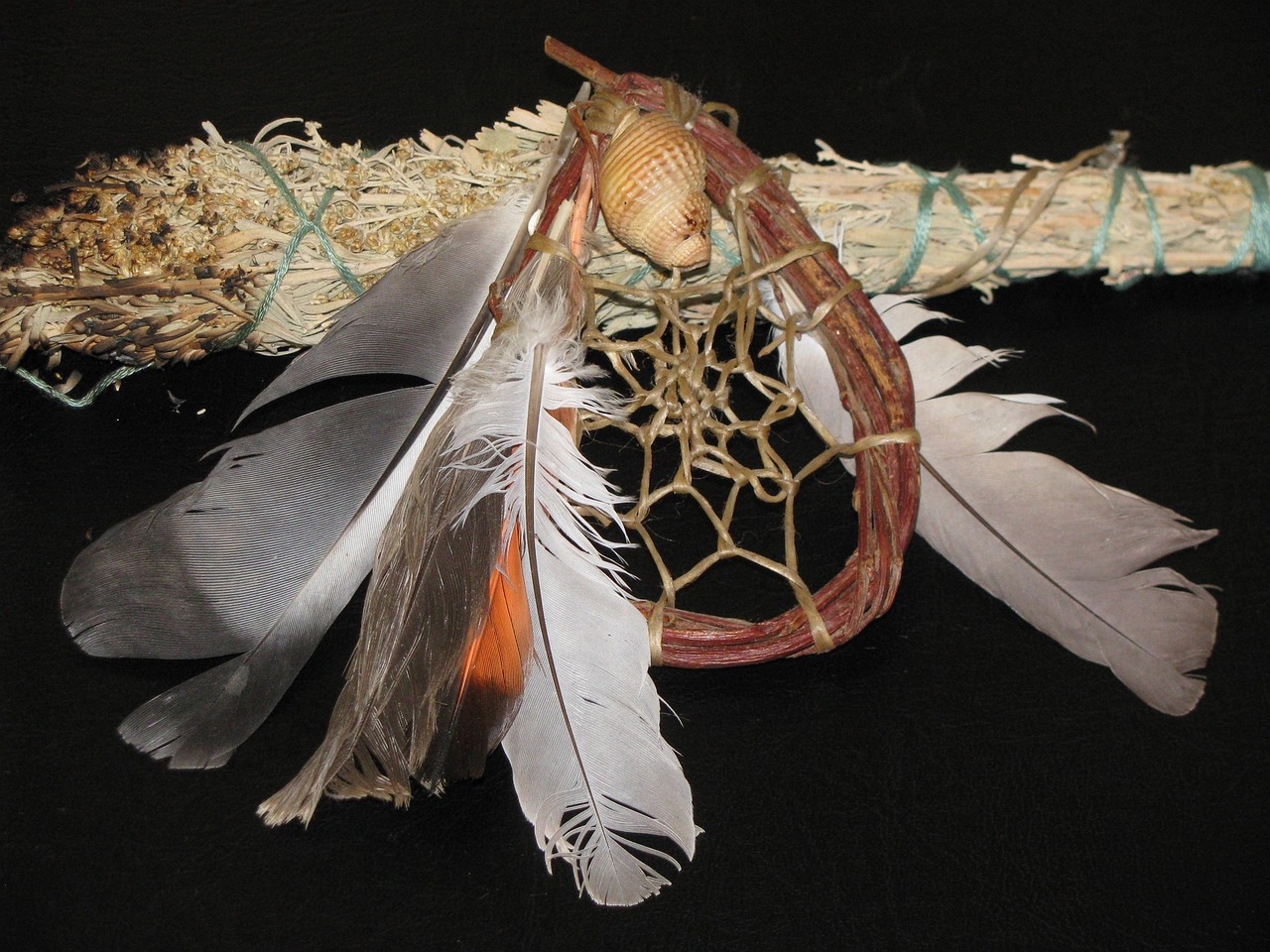
Dreamcatchers are globally popular – as decor, jewelry, or fashion. Yet their origins lie with the Ojibwe (Anishinaabe) of North America, where they are more than decorative objects. They carry spiritual meaning, protective functions, and stories connecting humans and nature.
🌿 Origins of Dreamcatchers
The Ojibwe traditionally made dreamcatchers from willow hoops, nets, and feathers. Hung over children’s beds, they were intended to let good dreams pass and filter out bad dreams. They were also part of initiation rites and personal protection practices.
Key Elements:
- Hoop – Symbolizes life, cycles, and connection to nature.
- Net – Catches bad dreams.
- Feather – Allows good dreams to descend gently.
🕸️ From Protective Symbol to Fashion Object
Since the 1960s, dreamcatchers spread through pop culture. Today, they are often used decoratively without context, leading to misunderstandings and criticism of cultural appropriation by Ojibwe and other Indigenous communities.
Problems of Appropriation:
- Symbolic stripping – spiritual and protective meaning is ignored.
- Absence of acknowledgment of the originating culture.
- Commercialization of Indigenous traditions without community involvement.
📜 Practical Wisdom
- Dreamcatchers are part of a living cultural heritage.
- Symbols lose meaning without context.
- Purchasing or using them requires respect and knowledge.
- Understanding the history behind the object shows recognition.
- Cultural sensitivity matters more than decoration.
👥 Who Is This Relevant For?
- Students, teachers, and culture enthusiasts
- Travelers & souvenir buyers
- Tattoo or jewelry enthusiasts
- Artists & designers
- Anyone seeking to understand cultural appropriation
❓ Frequently Asked Questions
Can one own a dreamcatcher?
Yes, but knowing its origin and meaning is important.
Where does the myth that dreamcatchers “grant wishes” come from?
This is a modern misinterpretation – traditionally they protect and filter dreams.
Is every dreamcatcher the same?
No – designs, materials, and rituals vary by family and region.
🔚 Conclusion
Dreamcatchers are more than decorative objects. They are spiritual tools, heritage items, and symbols of connection to ancestors and nature. Understanding and respect are key to separating myth from reality.