
In a world that equates “more” with “better,” the idea of living with few possessions seems like a radical counter-concept. For many indigenous cultures, however, this path was and is not a last resort, but the conscious foundation for a freer, more meaningful life. While our modern freedom is often defined as a choice between consumer options, indigenous wisdom shows us a freedom from – from burden, from dependency, from constant worry about things. This article explores how these ancient principles can offer us a compass today to find true mobility and inner wealth amidst the society of abundance.
Redefining Freedom: Mobility vs. Attachment
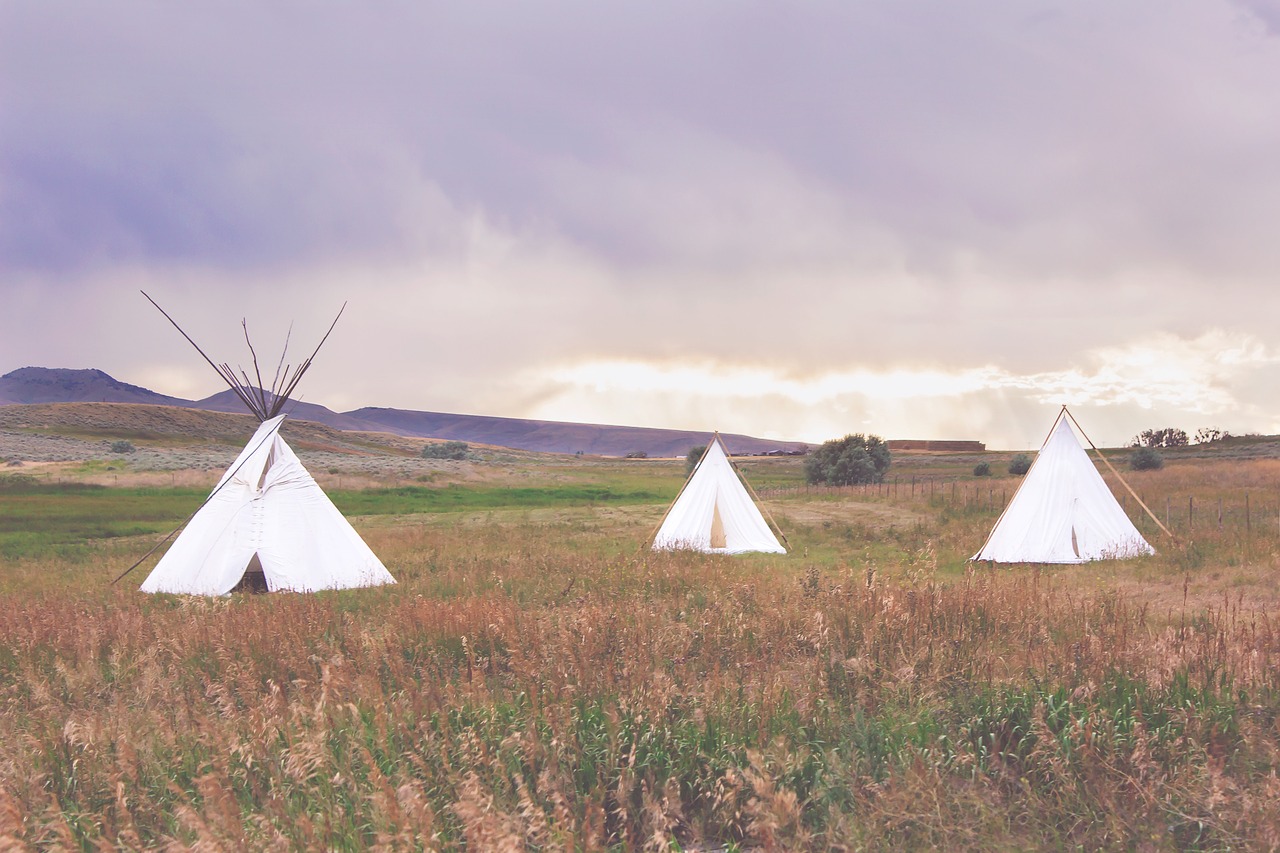
For many mobile hunter-gatherer cultures, such as the peoples of the North American Plains before the reservation era, physical and social mobility was vital for survival. Their possessions were designed for this: the tipi dwelling, which could be taken down and set up in an hour; utilitarian objects made from natural, locally available materials; only what one could carry oneself or transport on a horse. This “freedom to move” was directly linked to a “freedom from the burden of possessions.” They could follow the seasons, move with the buffalo herds, and simply move on in times of conflict. Their freedom was not an abstract idea but a lived, physical reality. In contrast, extensive possessions often bind us to a place, a mortgage, a job – and limit our real freedom of action.
Three Indigenous Principles for a Freer Relationship with Possessions
1. The Circle of Giving: Possessions as Flowing Energy
In many indigenous societies, goods circulate. The most famous example is the Potlatch ceremony of the coastal peoples of the Pacific Northwest, where a chief does not hoard his wealth but increases his prestige by generously giving it away to the community. Here, possession is not a static endpoint (“This belongs to me”) but a dynamic, social energy. To own something means having the responsibility and ability to pass it on when the community needs it. This attitude dissolves attachment to the object and transforms possession into an act of connection and prestige through generosity.
2. Everything is Borrowed: The Attitude of the Steward, Not the Owner
Deeper than the concept of ownership in indigenous thought often lies the concept of “stewarding” or “preserving for the next generations.” The land, the rivers, the animals – one does not “own” them, one is their temporary steward. This attitude can be transferred to material things: a tool, a garment, a vessel is treated with respect because it is a valuable link in a chain that existed before you and will be passed on after you. It relieves one of the illusion of permanent control and replaces it with a reverent responsibility.
3. Enough is Enough: The Principle of Sufficiency
The hunting ethics of many peoples taught to take only as much as needed for one’s own family and community. The rest was left for the regeneration of the animal population and for other beings. This principle of sufficiency is a powerful counterpoint to the dogma of growth. It does not ask: “How can I get more?” but: “When do I have enough to live well and safely?” Applying this question to our material possessions frees us from the endless hunt for the next, the new, the more.
Practical Steps: How We Can Integrate These Principles into Our Modern Lives
- The “Mobility” Test: Imagine a hypothetical situation: You had to move within 24 hours for an important reason, with only two suitcases. What would you take? The things on this list are your essential “possessions.” Everything else can be questioned for its true value and burden.
- Activate the Cycle – a “Giveaway Box”: Place a box in a closet. When you own something that is in good condition but no longer in use (clothing, books, kitchen appliances), put it in the box. Once it’s full, give it away unasked to a friend, a neighbor, or a social institution – as a modern, small potlatch.
- From Owner to Steward: Choose three valuable objects in your home (e.g., a piece of furniture, a book, a tool). Reflect: Who could use it well after you? Make yourself aware that you are only “stewarding” it for a while. This attitude changes the relationship to the object.
- Define the “Enough” Line: Choose a category (e.g., t-shirts, shoes, pots). Count what you have. Then set a realistic, sufficient upper limit for yourself (e.g., “7 t-shirts are enough”). Anything beyond that becomes part of your Giveaway Box.
- Prioritize Experience Over Possession: Consciously invest time and resources more in shared experiences (a shared meal, an outing, a workshop) than in buying new things. The memory of it is a “possession” that doesn’t weigh anything, takes up no space, and makes you richer.
For Whom is This Perspective Liberating?
- The Overwhelmed in Overstuffed Homes: People who feel crushed by their own things and are looking for a meaningful, not just organizing, method of decluttering.
- Followers of Minimalism and Simple Living: Those seeking a deeper philosophical and cultural foundation for their lifestyle beyond aesthetics and efficiency.
- People in Identity Crises: Those who notice they define themselves too much by their possessions and are searching for a more authentic source of self-worth.
- Environmentally Conscious Consumers: Those who feel the ecological burden of their consumption and are looking for an ethical and spiritual attitude that goes beyond recycling.
- Anyone Longing for More Lightness and Freedom of Choice: Those who feel that their financial obligations and material ballast are preventing them from dreams and spontaneous life changes.
Common Objections and Questions
Wasn’t that just poverty and scarcity?
This is a crucial difference. Poverty is the involuntary lack of necessary resources. The simplicity described here is a culturally chosen and valued way of life that creates wealth in other areas: in social relationships, in free time, in spiritual depth, and in connection to nature. It’s about abundance through reduction, not deprivation.
Does that even work in our complex, technological world?
We need to translate the principles, not copy the lifestyle. No one has to live in a tipi. But we can apply the principle of mobility by reducing our expenses and contracts. We can apply the principle of stewardship by buying durable, repairable things. We can live the principle of giving in our communities. The essence is adaptable.
Doesn’t that condemn anyone who wants to own beautiful things?
Not at all. It’s not about asceticism or condemnation. It’s about awareness and freedom of choice. The question is: Do I own the object, or does it own me? Do I have it out of genuine joy and appreciation, or out of habit, fear of scarcity, or a need for status? Indigenous thinking invites us to become conscious stewards instead of unconscious consumers.
Conclusion: The Freedom of Light Packs
Indigenous cultures teach us that true freedom does not wait on the horizon of the next purchase, but often lies behind us – in the decision not to own something. They remind us that every object we accumulate binds not only physical space but also mental energy and worry. By detaching from the idea of possession as an end in itself and instead seeing ourselves as participants in a cycle of giving, as stewards of transient treasures, and as conscious deciders of “enough,” we regain something that is priceless in our overloaded world: mobility, clarity, and the freedom to align our lives by the stars, not by the installment payments. It is an invitation to travel lighter – through life.