
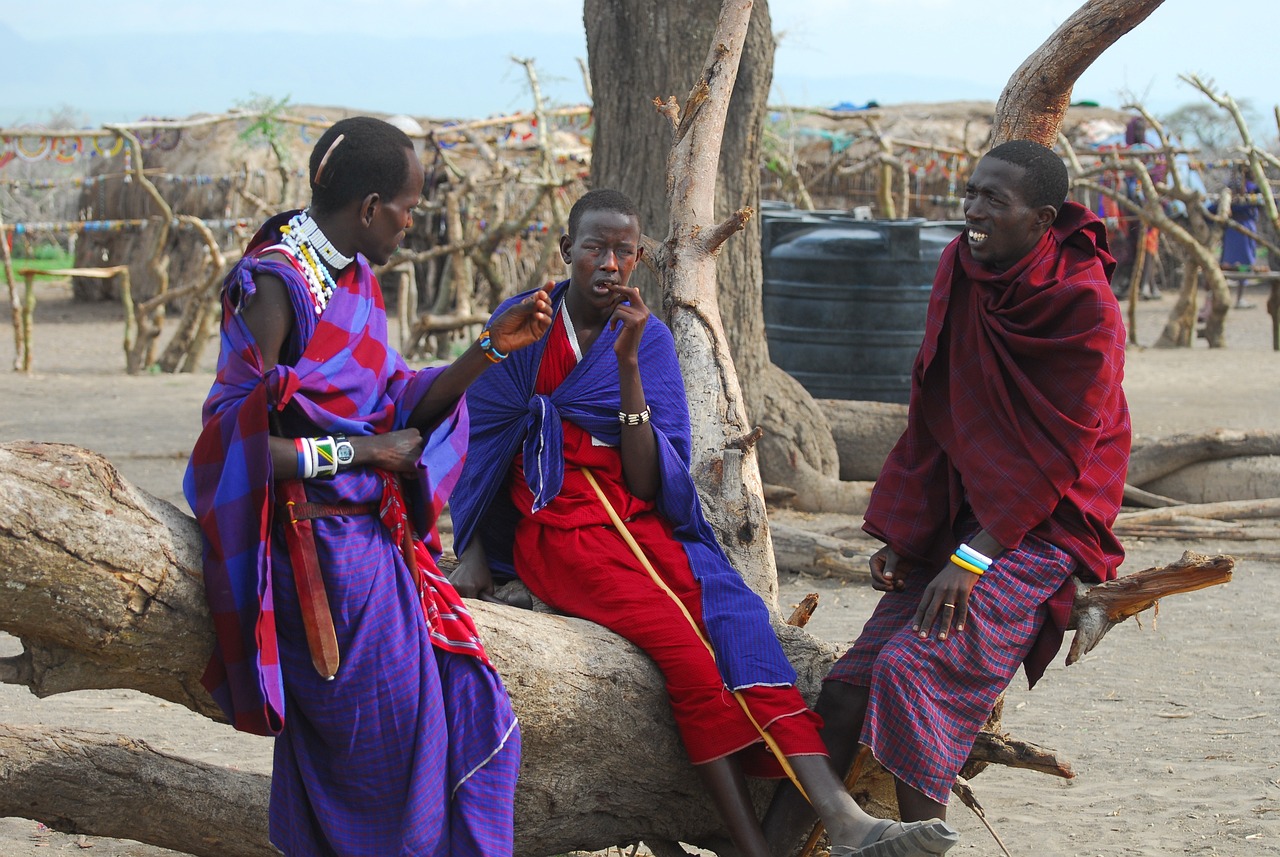
In a world where our navigation depends on blinking screens and satellites, the knowledge of finding the way without technology has almost disappeared. Yet for indigenous peoples, this ability was and is vital for survival and deeply intertwined with their worldview. Their orientation is based not on coordinates, but on relationship – to the landscape, to the stars, to animals, and even to the wind. This traditional knowledge is more than an emergency solution without batteries; it is a school of attention that teaches us to be at home in the world with all our senses once again. This article takes you into the art of natural navigation and shows how it can sharpen our perception to this day.
More Than Just “Not Getting Lost”: Orientation as a Holistic Practice
For indigenous cultures, orientation is never a purely technical problem. It is part of a lived relationship with the land. Every mountain, every river course, every striking tree is not just a feature but a living being with a history and a name. Finding the way from A to B therefore means “reading” a familiar landscape where every element has meaning. This deep familiarity comes from years of observation, from passing on stories about the landscape, and from walking the same paths as the ancestors. Orientation here is an active dialogue with the environment, not the passive following of a line on a screen.
The Three Great “Maps” of Natural Navigation
1. The Sky Map: Navigation by Stars and the Sun
Long before the compass was invented, celestial bodies served as reliable guides. The art of celestial navigation was widespread on all continents.
- The North Star (Polaris): For peoples of the northern hemisphere, the almost immovable North Star is the most reliable indicator of north. Many stories and myths revolve around it.
- The Southern Cross: In the southern hemisphere, this distinctive constellation takes on the role of a guide.
- The Sun as Clock and Compass: The sun’s path not only indicates east and west. By observing shadow length (short = noon, sun in the south) and the direction of shadow movement, one can determine both the time of day and the cardinal direction.
- Moon and Star Constellations: Entire constellations were read as “celestial maps” that, at certain times of the year, indicated the direction to hunting grounds, water sources, or sacred places.
2. The Earth Map: Reading Natural Signs
The earth itself carries countless clues for the attentive observer.
- Vegetation: Trees and shrubs often grow asymmetrically. In the northern hemisphere, the south side of a solitary tree is often sunnier and more densely vegetated, while mosses and lichens thrive more on the shady, moister north side.
- Wind and Weather Patterns: Prevailing wind directions shape the landscape. Trees can be “flagged,” with their branches pointing in the prevailing wind direction. Cloud formations and their direction of movement provide clues about coming weather and can be used for orientation.
- Topography and Watercourses: The knowledge that streams flow into rivers and rivers ultimately to the sea was fundamental. Mountain ranges, canyons, and other landmarks served as huge, natural signposts.
- Animal Behavior: Migratory birds move in clear directions during certain seasons. The trails of animals to water sources can also show a human the way.
3. The Inner Map: Body Awareness and Kinesthetic Memory
The most advanced navigation aid is our own body. Traditional hunters and wanderers developed a highly sensitive kinesthetic memory. They remembered the path not only visually, but also through the feeling of ascents and descents, the texture of the ground underfoot, smells, and even changes in air temperature in different terrains. After long journeys, they could retrace their path almost flawlessly in darkness or with closed eyes. This “body map” is a forgotten human ability.
Why This Knowledge is Still Valuable Today
- Independence and Resilience: Technology can fail (dead battery, no signal). Knowing how to rely on natural signs creates safety and self-confidence in nature.
- Deep Connection to the Environment: Natural navigation forces us to slow down, look, and listen carefully. It transforms a walk or hike from a goal-oriented act into a rich, sensory experience.
- Training Attention and Memory: Our “digital dementia” – the outsourcing of memory tasks to devices – is challenged here. Reading landscapes trains the mind and spatial imagination.
- Cultural and Ecological Awareness: This knowledge is rooted in a deep understanding of local ecosystems and their rhythms. It fosters respect and the realization that humans are an integral part of the natural fabric.
- Spiritual Dimension: For indigenous peoples, traveling is often a sacred act. Every journey is an encounter with the spirits of the land. This attitude can transform our modern travel from a mere change of location into a pilgrimage-like experience.
Practical Exercises: Your First Steps in Natural Navigation
- Find the North Star (or the Southern Cross): Learn to identify these key stars in the night sky. It is the most fundamental skill.
- Observe a Tree: Find a solitary tree in your area. Examine its bark, moss growth, and branch density on all sides. Confirm with a compass (only at first!) whether the patterns match the north-south orientation.
- Go “Blind”: Go with a partner on a short, familiar path in safe terrain (e.g., a park). Close your eyes for a few minutes and let yourself be led. Focus entirely on the sounds, smells, the ground under your feet, and the changes in direction. Afterwards, try to describe the path from memory.
- Create a Natural Map: Don’t take a GPS on a hike. Instead, try to make a rough sketch of your route using natural features: “from the large, broken spruce trunk west to the stream, then follow the stream southward…”
- Ask the Weather: Observe the clouds and the wind. Try to predict from which direction the weather is coming and whether the wind direction changes during the day.
For Whom is This Art Relevant Today?
- Hikers, Bushcrafters, and Outdoor Enthusiasts: Who want to reduce their dependence on technology and deepen their wilderness skills.
- People Longing for Presence and Mindfulness: Who are distracted in daily life and are looking for a practice that brings them back into the present moment and their senses.
- Parents and Educators: Who want to teach children exciting, practical knowledge about nature that fosters a spirit of adventure and observation.
- Artists, Writers, and All Creatives: Who are looking for new ways to sharpen their perception and build a deeper connection to their surroundings as a source of inspiration.
- Anyone Feeling They Live in a “Pre-Configured” World: Who want to rediscover the satisfaction of understanding and mastering something through their own observation and deduction.
Frequently Asked Questions
Is this knowledge applicable everywhere in the world?
The basic principles (sun, stars, land reading) are universal, but the specific signs vary by ecosystem (desert, rainforest, Arctic). The genius of indigenous knowledge is its extreme locality and adaptation. It teaches us above all to become experts in our own local space, rather than expecting universal, technical solutions.
Do I need years of experience to use it?
Like any skill, it starts with small steps. Even the simple knowledge of the North Star or consciously observing trees can be crucial in an emergency. It’s about the process of learning and increasing familiarity, not perfection.
Doesn’t this traditional knowledge completely replace modern technology?
It doesn’t have to be an either-or. Modern technology is wonderful for efficiency and global connectivity. Traditional knowledge is a complementary competency. It trains abilities that technology cannot replace: intuitive perception, ecological understanding, and resilience. The wisdom lies in possessing both resources and using them wisely depending on the situation.
Conclusion: The Journey is the Destination – and the Map is Everywhere
The traditional orientation knowledge of indigenous peoples is an invitation to step out of the passive role of a navigation consumer. It transforms the world from an area to be crossed into a living text to be read. Every hike becomes a journey of discovery, where the true richness lies not at the destination but in the deepened understanding and intensified perception of the path itself. By relearning these skills – even if it begins with small steps in the city park – we gain not only practical safety but also something much more valuable: the feeling of being truly at home in this world and deeply connected to it. The compass is within us and all around us. We just have to learn to read it.