
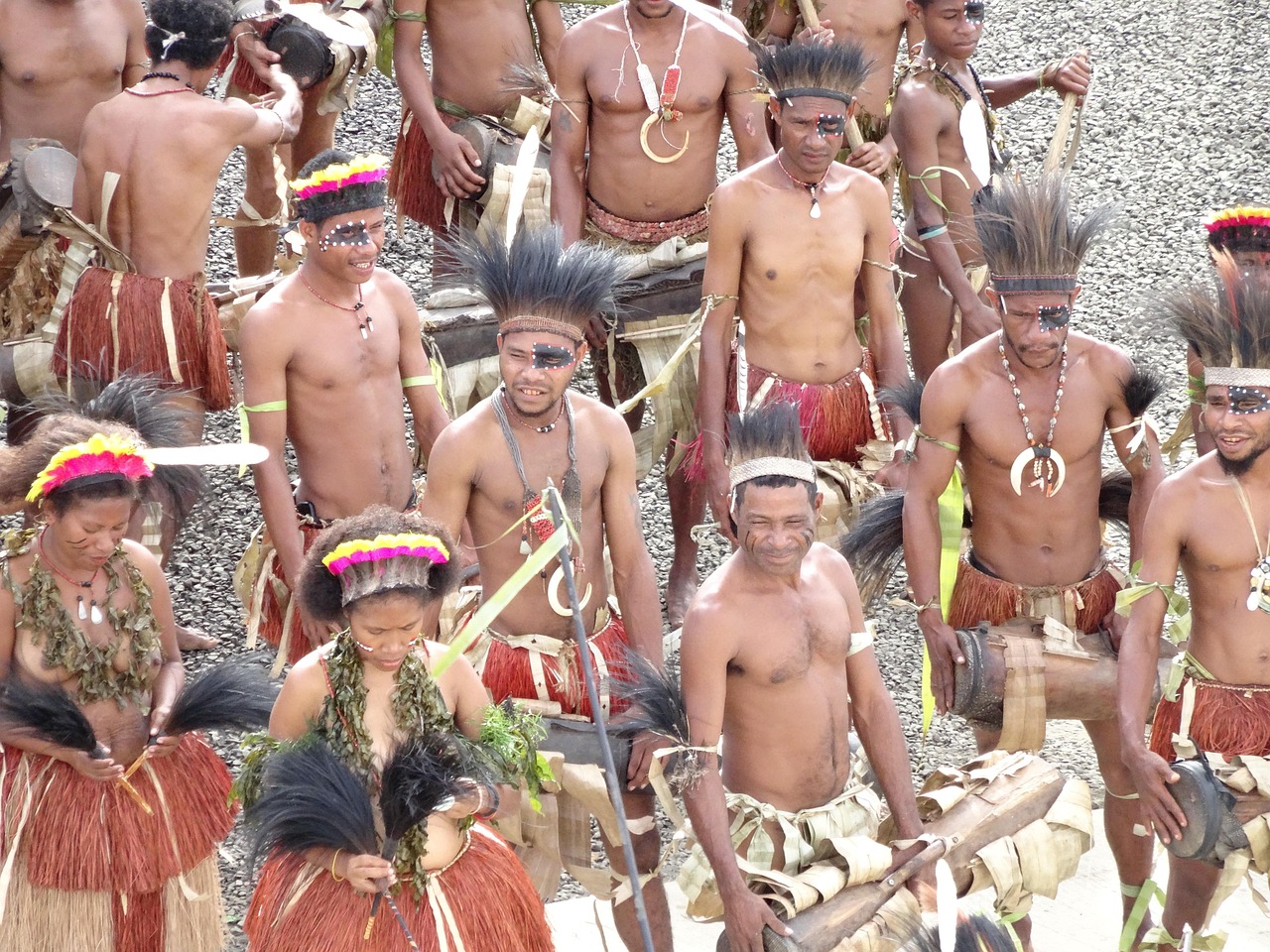
Identity – in Western modernity often reduced to nationality, profession, or consumer style – is a fundamentally different concept for many Indigenous peoples. Here, self-understanding is not rooted in abstract ideologies, but in concrete, generations-old relationships to a specific land, to non-human kin, and to the stories that weave both together. In a globalized, often displaced world, this indigenous perspective on cultural roots and identity can not only fascinate but radically challenge and enrich our own understanding of who we are and where we belong. This article explores this transformative viewpoint.
Identity as Rooted Relationship: The Antidote to Alienation
While modern identities can often be chosen, constructed, or performed, many Indigenous people describe their identity as something given and relational. One does not simply be an individual with certain traits; one is a part of the relationships that define them: child of X, grandchild of Y, guardian of river Z, member of the Bear Clan. This identity is inseparable from a specific place – the hills where ancestors are buried, the river that taught the language, the forest that holds the clan history. It is an identity of responsibility, not possession.
Three Indigenous Teachings on Identity That Challenge Us
based-belonging-vs-global-citizenship">1. “You Are Where You Come From”: Place-Based Belonging vs. Global Citizenship
The modern ideal of the “Global Citizen” emphasizes mobility and detachment from local bonds. Indigenous thinking reverses this: Deep knowledge and responsible care for a specific place are seen as the highest form of maturity and identity. Your identity is shaped by the most intimate knowledge of the land, its seasons, stories, and needs. This place-based identity is not in contradiction to the world but offers the only solid foundation from which to truly engage with it. It asks us: Can one truly “love the world” without deeply knowing and protecting a concrete piece of earth?
2. The Aliveness of the Ancestral Line: The Past as a Present Force
In a culture constantly looking forward, ancestors are often just historical data. In many Indigenous worldviews, ancestors are active presences. They are in the landscapes, in the traditions, in the dreams of the living. One’s own identity consciously includes these ancestors; one acts in remembrance of them and with the knowledge that one’s actions affect the dignity of the past and the possibilities of the future (the next seven generations). Identity thus becomes a bridge between generations, carried by the responsibility to pass on the heritage intact and alive.
3. The Relational Self: “I Am Because We Are” (Ubuntu) and “We Are All Related” (Mitakuye Oyasin)
Western individualism celebrates the autonomous, collective-bounded self. Indigenous philosophies, as expressed in the African Ubuntu or the Lakota Mitakuye Oyasin, define the self through its relationships. Your humanity is inseparable from your relationship to other humans, but also to animals, plants, and elements. Your identity as a “human” is tied to this relational ethic. This creates an identity based not on separation (“me vs. the others”) but on integration and mutual dependence (“me through us”) – a powerful antithesis to exclusion and isolation.
Practical Reflection: What Does This Mean for Our Modern Understanding of Identity?
- Explore Your Own (Lost) Roots: Take time to research the history of the land you live on. Who lived here 100, 500 years ago? What stories are connected to this place? This research is not about assigning guilt but an act of re-rooting and respectful remembrance.
- Cultivate Deep, Responsible Relationships – Even with Non-Humans: Develop a conscious relationship with a tree, a garden, a bird that visits regularly. Learn its “personality” and annual cycles. This practice trains relational thinking beyond the purely human.
- Define Yourself by Your Care, Not Your Possessions: Ask yourself: What am I responsible for? Which people, which piece of nature, which tradition or knowledge? Let this responsibility become a core part of your self-definition.
- Integrate Ancestors into Your Consciousness: Whether biological or spiritual ancestors (teachers, inspiring historical figures): allow their legacy to consciously inform your values and actions. What would you do to honor their dignity and carry forward their wisdom?
- Seek Communities of Belonging, Not Blood: Consciously build “chosen families” – communities with whom you share values, responsibility, and care. Identity can also be deeply rooted in chosen, intentional relationships.
Who is This Reflection Particularly Relevant For?
- People in Identity Crises or Searching for Meaning: Who feel unaddressed by consumerist or performance-oriented identity offers.
- Migrants and Global Nomads: Living with multiple belongings and searching for an authentic, non-exclusive form of rootedness.
- Environmental Activists and Social Workers: Looking for a deeper philosophical foundation for their engagement beyond politics or morality.
- Parents and Educators: Wanting to impart values and a sense of identity to children based on connectedness and responsibility rather than competition and possession.
- Anyone Feeling “Uprooted” in Modernity: And searching for ways to re-enter a meaningful, responsible relationship with the world.
Frequently Asked Questions & Critical Objections
Doesn’t this emphasis on roots and place lead to exclusive nationalism or ethnocentrism?
This is a crucial question. The difference lies in the quality of the bond. An Indigenous, place-based identity is inclusive in its exclusivity: It defines itself through deep knowledge and care for a specific place but does not fundamentally exclude others; instead, it invites guests to respectfully learn about this place. Unlike nationalism, which is often based on abstract ideology and separation from “foreigners,” it is based on concrete, loving responsibility. The teaching “We are all related” always expands the concept of local kinship to the global.
In an urban, mobile world, can one even develop such a place-based identity?
Yes, but it looks different. It can focus on a neighborhood, a community garden, a park, or even a digital community with shared values. The core is not the rural idyll, but the practice of deep, responsible, and intergenerational relationship to a specific web of life and history – even if that web is located in a city.
Isn’t it hypocritical or presumptuous for a non-Indigenous person to claim these concepts?
It is not about copying or claiming Indigenous identities. It is about learning from their profound philosophical insights to heal our own, often sick, notions of identity. We can apply the principles of rootedness, relational responsibility, and ancestral connection to our own, hybrid, and modern contexts, while respectfully acknowledging and supporting the unique, often traumatic struggles of Indigenous peoples to preserve their specific identities.
Conclusion: From the Uprooted Individual to the Related Guardian
The heritage of Indigenous thought on identity does not offer us a simple return to a romanticized past. Instead, it offers us a compass for a possible future. A future in which identity is not what separates us from others but what weaves us into a web of mutual responsibility. Where we are not owners, but guardians; not isolated consumers, but members of a living, intergenerational community of humans and non-humans. By integrating these teachings into our modern consciousness, we can begin to heal the deep wound of alienation and develop an identity that is both deeply rooted and widely open – to life in all its relational fullness.