
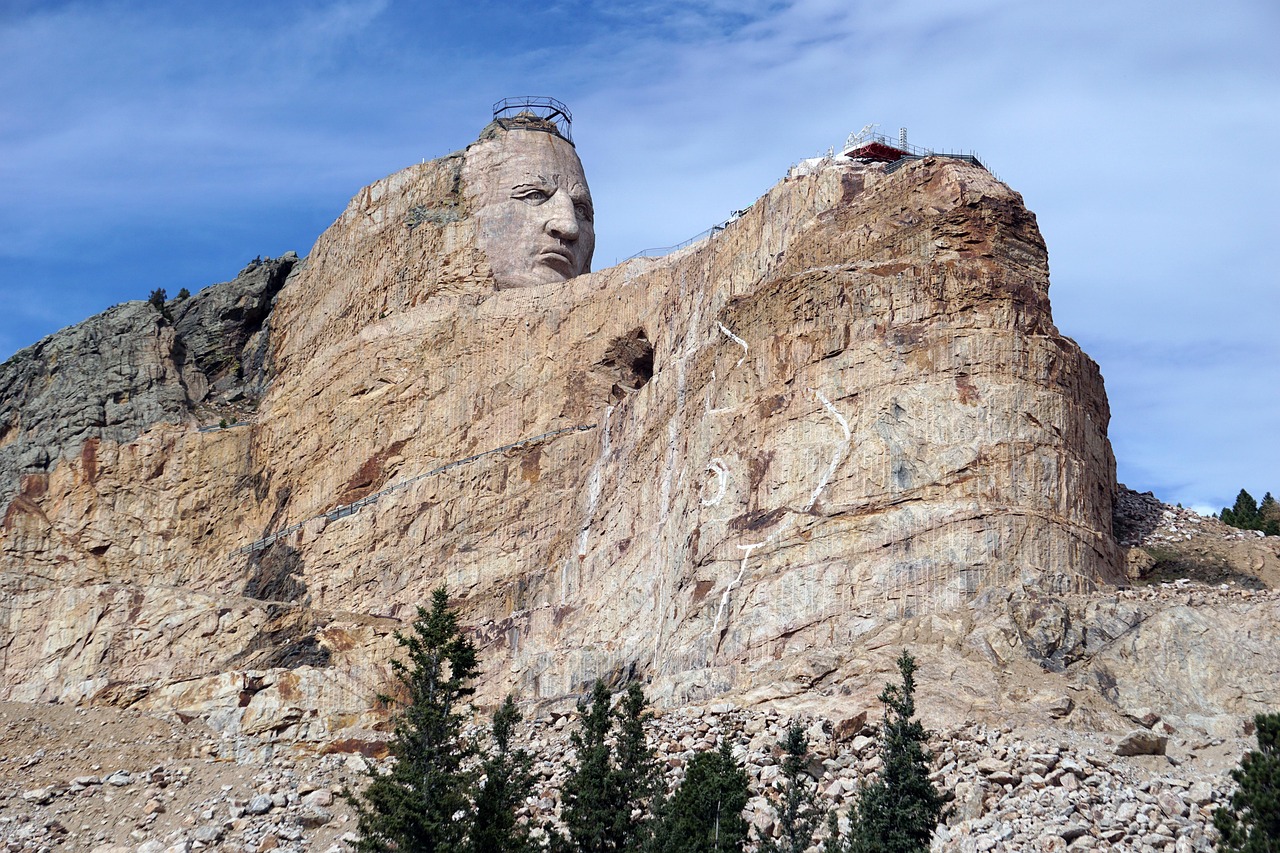
What Really Happened on June 25, 1876 at the Little Bighorn River?
While history books often glorify the event as “Custer’s Last Stand,” the Lakota and Cheyenne perspective tells a very different story—one of brave resistance, spiritual preparation, and the fight for a people’s freedom.
Background: The Broken Treaty of 1868
To understand the Battle of the Little Bighorn, you have to look at the years leading up to it.
The Treaty of Fort Laramie (1868) guaranteed the Lakota and Cheyenne undisturbed use of the Black Hills—sacred land where the spirits lived.
What happened next?
- 1874: Gold was discovered in the Black Hills
- White settlers and gold seekers flooded illegally into Lakota territory
- The U.S. government demanded that the Lakota move into reservations
- Many Lakota and Cheyenne refused to give up their sacred land
The Great Summer Encampment
In June 1876, 7,000–10,000 Lakota, Cheyenne, and Arapaho gathered along the Little Bighorn River—one of the largest Native camps ever assembled.
Who was there?
- Sitting Bull – Hunkpapa Lakota spiritual leader
- Crazy Horse – Oglala Lakota war leader
- Gall – Hunkpapa Lakota war chief
- Two Moon – Cheyenne chief
- Rain-in-the-Face – Hunkpapa Lakota warrior
The Sun Dance Ceremony: Spiritual Preparation
Just before the battle, Sitting Bull performed a powerful Sun Dance ceremony. He danced for 36 hours, sacrificing 100 small pieces of flesh from his arms, and received a vision.
Sitting Bull’s vision:
- He saw soldiers falling from the sky like grasshoppers
- They fell headfirst into the Indian camp
- A voice said: “I give you these soldiers.”
- The elders interpreted this as a promise of great victory
The Morning of June 25, 1876
While Custer planned his attack, life in the camp went on as normal. Women gathered firewood, children played, and men prepared for the buffalo hunt.
The First Warning Signs
Around 3 p.m., young boys tending horses noticed the animals suddenly spooking. Moments later, they heard gunshots.
Eyewitness account from Standing Bear (age 15):
“We heard shouting: ‘The soldiers are coming!’ Women cried out for their children. The warriors grabbed their war shirts and weapons.”
The Battle from Lakota and Cheyenne Perspectives
Reno’s Attack on the South End
Major Reno struck the Hunkpapa camp at the southern end. The response was fast and coordinated.
From the Lakota point of view:
- Warriors gathered behind the tipi rows
- They repelled Reno’s attack and forced him to retreat
- Reno’s men fled across the river to defensive positions
- The Lakota and Cheyenne now controlled the battlefield
Custer’s Attack on the North End
While Reno fell back, Custer approached the north with five companies.
Cheyenne eyewitness Kate Big Head recalled:
“We saw the soldiers on the hills. They fired, but the bullets passed high above our heads. Our warriors quickly surrounded them.”
The Encirclement – “Like Buffalo in the Hunt”
What followed was not an orderly battle but a rapid, overwhelming encirclement.
Lakota and Cheyenne tactics:
- Mounted warriors swept around Custer’s position
- They attacked from all directions at once
- The soldiers could not form defensive lines
- The fighting ended in less than an hour
Crazy Horse’s Decisive Leadership
Crazy Horse led his warriors in a wide arc around Custer’s flank, cutting off any escape.
His way of fighting:
- Fast, unpredictable charges
- Using the land for cover
- Leading by personal bravery, not commands
- Full control of the field
The Immediate Aftermath
Reactions in the Camp
The victory was not celebrated. It was seen as necessary defense.
Cheyenne warrior Wooden Leg remembered:
“We were not happy. We knew more soldiers would come. The old ones said: ‘This is a great victory, but it will cost us dearly.’”
Treatment of the Fallen
Despite later myths, most soldiers were not scalped or mutilated.
Many Lakota and Cheyenne said they respected the fallen as brave warriors who fought to the end.
Why They Won: Key Factors in Indigenous Memory
1. Spiritual Preparation
Sitting Bull’s vision strengthened courage and unity.
2. Numerical Advantage
The huge summer encampment meant many warriors were present.
3. Tactical Flexibility
They fought on familiar ground with mobile, adaptive tactics.
4. Leadership
Crazy Horse, Gall, and others led by example.
5. Motivation
They fought for their families, their freedom, and their sacred land.
Long-Term Consequences for the Lakota and Cheyenne
The victory was short-lived. The U.S. government escalated its military operations.
Consequences:
- Intensified campaigns against all “hostile” tribes
- Scattering of the large encampments
- Many fled to Canada, including Sitting Bull
- Ultimate defeat and confinement to reservations
- Crazy Horse’s tragic death in 1877
Oral Traditions vs. Written History
Lakota and Cheyenne accounts differ sharply from official U.S. military reports.
Key differences:
- No heroic “last stand” by Custer
- The defeat was fast and overwhelming
- Focus was on defense, not conquest
- The spiritual dimension mattered profoundly
Modern Perspectives and Remembrance
Today, the descendants of the Lakota and Cheyenne remember the battle as a symbol of resistance and cultural survival.
Its modern meaning:
- A reminder of broken treaties
- A story of unity and courage
- A lesson in resilience
- A continued assertion of cultural identity